Czech Project Apartment Renovation and Other Soviet Building Series
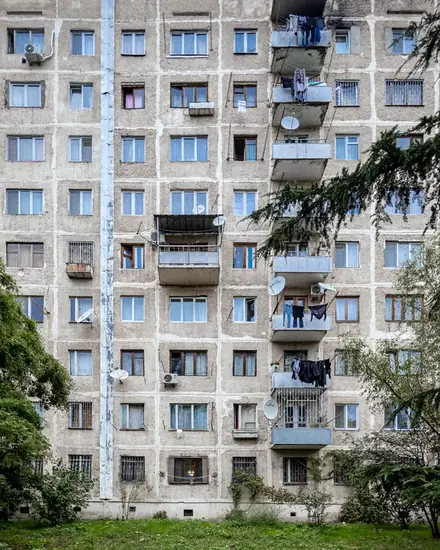
The ceiling height in a Czech project apartment is about 2.8 m. Apartments have 1 to 4 rooms. A 4-room flat measures about 95-110 m², and the kitchen is 7-9 m². You can request your apartment's floor plan as an inventory plan from the Technical Accounting Archive of the Public Registry.
Renovating a Soviet building series apartment in Tbilisi has no separate rate. A full renovation, works and materials all-in, costs 500-1,100 GEL per 1 m² at a standard level.
A full renovation costs about 1,000-2,000 GEL per 1 m² or more at a premium level.
For costs and details on other building types, see our guide to renovation by building type.
Renovation levelA full renovation of a 60 m² apartment, works and materials all-in, costs about 30,000 to 66,000 GEL (2026).
Labour and materials. Not included: furniture, appliances, debris removal (about 150-300 GEL a truckload) and cleaning after the works (about 15 GEL per m²). Keep about 10-15% of the budget aside for the unexpected; we start any extra work only after your written yes.
What is and isn't in the priceTbilisi’s Soviet residential blocks were built as repeating standard series across neighbourhoods.
From the Khrushchev era onward, panel and large-block buildings were assembled from factory-made elements with fixed room layouts.
Your building series determines ceiling height and wall material. Before you can tell which walls are load-bearing, you first need to know which series you have.
How Can You Tell Which Soviet Building Series Your Apartment Is?
You can identify your apartment’s building series by its floor count, wall type, and balcony or loggia shape. The entrance hall and number of lifts also help identify the series.
- Floors. Khrushchyovka (Khrushchev-era block) buildings have 3-5 floors. Czech, Moscow and Lviv projects usually have 9 floors (8-10 in some Czech blocks, and 7-9 in Moscow blocks).
- Leningrad project buildings have 9 floors, though property listings also use the name for 5-storey blocks.
- Kalakuri (“city”) project complexes have 14-16 floors, though listings also use this name for 8-storey buildings.
- Walls. In Khrushchyovka, Moscow and Czech project buildings, load-bearing walls are thicker than partitions at about 30-40 cm.
- Czech buildings are built from large precast blocks, and Moscow project buildings use precast concrete panels. Leningrad project buildings are usually built from brick.
- Balcony. The Czech project stands out for a long loggia often next to the kitchen and bold vertical panels on the facade.
- The Leningrad project has deeply recessed loggias, and the Lviv project usually has long balconies. A Khrushchyovka has a tiny balcony or none at all.
- Entrance hall. A Czech project entrance hall has 1 lift, while 14-16-storey Kalakuri complexes have 2 lifts per entrance.
- A Khrushchyovka usually has no lift, and a Moscow project building usually has 2 to 10 entrances (sections).
You can look up your building series online or in the public archive. Asking a structural engineer or architect is the safer choice.
Tbilisi Soviet Building Series at a Glance
| Series | Floors | Walls and insulation | Apartments | How to spot it |
|---|---|---|---|---|
| Czech | 9 (also 8-10) | Large precast blocks | 1-4 rooms, 4-room about 95-110 m², kitchen 7-9 m² | Vertical panels on facade, 1 lift per entrance, often a long loggia by the kitchen |
| Moscow | 9 (also 7-9) | Precast concrete panels | 1, 1.5, 2.5, 3.5 and 4.5 rooms | Usually 2 to 10 entrances (sections) |
| Leningrad | 9 (also 5-storey in listings) | Usually brick | Similar to Czech, with deeply recessed loggias | |
| Kalakuri | 14-16 (also 8-storey in listings) | Monolithic concrete or block (in 14-16-storey) | Spacious rooms, separate bedrooms | 2 lifts and 5-8 apartments per floor in 14-16-storey blocks |
| Lviv | 9 | Better thermal insulation than Khrushchyovka | Average 55-75 m² | Usually long balconies; lift; often a rubbish chute in the entrance hall |
| Khrushchyovka | 3-5 | Panel or brick | 30-50 m² | Usually no lift |
For the specifics and renovation costs of 3-5-storey Khrushchyovka blocks, see our guide to Khrushchyovka renovation.
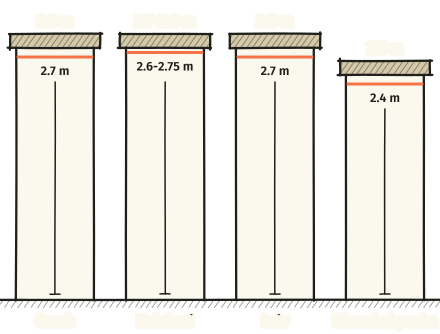
| Series | Ceiling height | After a stretch ceiling |
|---|---|---|
| Czech | About 2.8 m | About 2.7 m |
| Kalakuri | About 2.7-2.8 m | About 2.6-2.75 m |
| Lviv | About 2.8 m | About 2.7 m |
| Khrushchyovka | About 2.5 m | About 2.4 m |
A stretch ceiling takes up 5-10 cm of height and is not recommended for ceilings of 2.5 m or lower. A skimmed and painted ceiling with recessed lighting keeps your full ceiling height.
Czech Project: Ceiling Height, Layout and Renovation
What Is the Ceiling Height in a Czech Project Apartment?
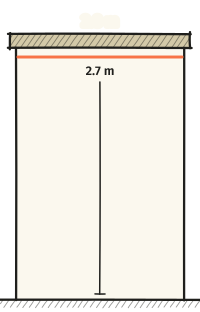
The ceiling height in a Czech project apartment is about 2.8 m. Installing a stretch ceiling takes 5-10 cm and leaves about 2.7 m of clearance.
Stretch ceilings are not advisable at 2.5 m or lower, which is typical of Khrushchyovka flats.
Walls and Layout
Czech project walls and layouts come from a Georgian large-block version of the all-Union II-18/12 series designed in Moscow in 1965.
The first Tbilisi version, called “Gldani 2”, was prepared in 1969 and first handed over in 1971-72.
During the 1970s and 1980s, thousands of these residential buildings went up in Gldani, Saburtalo, Temka, Varketili, Mukhiani and other districts.
- Apartments have 1 to 4 rooms. A 4-room flat measures about 95-110 m², and the kitchen is 7-9 m².
- Rectangular rooms make furniture layout straightforward.
- A long loggia often sits right next to the kitchen.
Moscow Project: Walls and Layout
The Moscow project was designed in 1966 and delivered on a large scale throughout the 1970s.
Moscow project buildings usually have 9 floors (sometimes 7-9 floors) and 2 to 10 entrances (sections).
Moscow project apartments come in 1, 1.5, 2.5, 3.5 and 4.5-room layouts.
You must check whether a wall is load-bearing before cutting any opening, because the buildings use precast concrete panels.
Leningrad Project: How Does It Differ?
The Leningrad project looks very similar to the Czech project. Leningrad project buildings are usually built of brick and have deeply recessed loggias.
Property listings use the Leningrad project name for both 5-storey and 9-storey buildings. Always verify the floor count and wall material of your specific block.
Kalakuri Project: Ceiling Height and Renovation
The ceiling height in a Kalakuri project apartment is about 2.7-2.8 m.
The name Kalakuri covers buildings ranging from 8-storey blocks to 14-16-storey monolithic or block complexes. The 14-16-storey complexes have 2 lifts per entrance and 5-8 apartments per floor.
In one 62 m² Kalakuri apartment in Saburtalo, extra partitions were removed. The kitchen was moved into part of the loggia to create a studio-style layout.
Panel and Block Buildings: Which Walls Can You Remove?
Whether you can remove a wall depends on whether the wall is a load-bearing structure. Load-bearing walls support the floor slab above, and removing even one can collapse part or all of the building.
In Batumi in October 2021, nine people died when a Khrushchyovka Soviet block collapsed. According to the investigation’s version, both load-bearing and non-load-bearing walls had been removed in one apartment.
In Khrushchyovka, Moscow and Czech buildings, a load-bearing wall is thicker than a partition at about 30-40 cm. Identify your building series first, then have a structural engineer inspect the wall.
When does wall demolition need a permit?
- Moving, adding or removing an internal partition, or cutting an opening in one, counts as repair (renovation).
- Internal partition work needs neither a permit nor prior notice, except for fire-resistant partitions.
- Removing a load-bearing structure or cutting an internal opening in one counts as structural reconstruction.
- Structural reconstruction requires a permit or at least formal notice, under a procedure set by the Architecture Service.
- Load-bearing walls are the shared property of all owners in the building. Their demolition likely requires consent from 2/3 of the homeowners’ association members.
Partition demolition costs 10-35 GEL per 1 m² of wall. Building a new plasterboard (drywall) partition costs about 20-40 GEL per 1 m² for labour.
Floors in a Panel Building
Uneven or damaged floors in an older apartment often need proper preparation before laying the final floor covering. A full renovation includes pouring a new floor screed.
Floor screed labour costs 10-20 GEL per 1 m². See the full process in our guide to laying a floor screed.
What Should You Check Before Removing a Wall or Choosing a Ceiling?
How Much Does It Cost to Renovate a Soviet Building Apartment?
A Soviet building series apartment has no separate renovation rate. A full renovation, works and materials all-in, costs 500-1,100 GEL per 1 m² at a standard level.
A full renovation costs about 1,000-2,000 GEL or more at a premium level.
| Level | 1 m² | 50 m² | 60 m² | 80 m² | 100 m² |
|---|---|---|---|---|---|
| Standard level | 500 to 1,100 GEL | 25,000-55,000 GEL | 30,000-66,000 GEL | 40,000-88,000 GEL | 50,000-110,000 GEL |
| Premium level | 1,000 to 2,000 GEL or more (approx.) | 50,000-100,000 GEL or more | 60,000-120,000 GEL or more | 80,000-160,000 GEL or more | 100,000-200,000 GEL or more |
You can calculate the cost for any other floor area with the calculator above.
Managing from abroad? Write in English for a free written preliminary estimate in 2 working days by email, WhatsApp, or Viber. How we run a job for owners abroad is on renovation for owners abroad.
Your written estimate arrives within 2 working days by email, WhatsApp or Viber, with no obligation.
Where Can You Find Your Apartment’s Floor Plan?
You can request your apartment’s floor plan as an inventory plan from the Technical Accounting Archive of the Public Registry.
The Public Registry archive issues inventory plans, property certificates and copies of archival records. You can submit your application online from home.
Frequently Asked Questions
Why Is It Called the Czech Project?
The Czech project has no connection to Czech builders or Czech technology. The Czech project is a Georgian large-block version of the all-Union II-18/12 series designed in Moscow in 1965.
First prepared in Tbilisi in 1969 and also called “Gldani 2”, its exact nickname origin remains unknown.
What Is the Kavlashvili Project?
The Kavlashvili project refers to 12-16-storey tower blocks from the late 1970s. Kavlashvili blocks were handed over in the 1980s in Gldani, Mukhiani and on Nutsubidze Plateau.
You can spot Kavlashvili buildings by their bright entrance halls and rectangular balconies with open metal railings.
How Much Does It Cost to Renovate a 4-Room Czech Project Apartment?
A 4-room Czech project apartment is about 95-110 m² and is priced at the general apartment renovation rate.
At the standard full renovation rate, a 100 m² flat costs 50,000-110,000 GEL. That standard cost is about $19,300 to $42,400.
The dollar amount uses the National Bank of Georgia rate of 2.5973 GEL per US dollar (3 November 2026).
At a premium level, renovating a 100 m² apartment costs 100,000-200,000 GEL or more.
Do You Need a Permit to Remodel a Soviet Apartment Layout?
Whether remodelling a Soviet apartment layout needs a permit depends on whether the work touches a partition or a load-bearing wall.
Moving, removing or building internal partitions requires neither a permit nor prior notice, except for fire-resistant partitions.
Removing a load-bearing wall or cutting an opening in one requires a permit or at least formal notice. The Architecture Service sets the procedure.
Other Building Types
Request an estimate
Based on your floor area, building type, and photos, you get a free reply by email, WhatsApp, or Viber within 2 working days, with no obligation. Before the contract we see the flat, in person or on a video call, and fix the price.
Our schedule is booked until January 2027, so new renovations start from January. You still get your estimate now, and we agree the date to see the flat now.