Wall Removal Permit: When Layout Changes and Balconies Need One
Under Government Decree No. 255, moving, removing, or adding an internal partition wall needs neither a building permit nor a notice. Cutting a doorway in a partition also counts as repair.
The legislation on this page was checked as of 29 October 2026.
Demolishing a load-bearing wall or cutting an opening in it counts as reconstruction. In an apartment building, this usually requires a permit because the building class applies to the whole structure.
Consent from your neighbours and the homeowners’ association is a separate issue from a City Hall permit. Permits are the first item on our planning checklist, so check these rules before changing your layout.
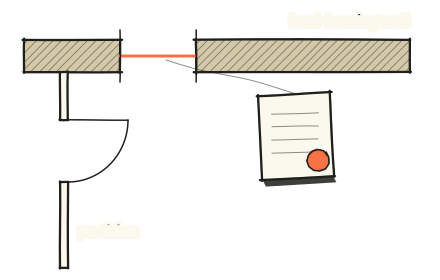
Do you need a permit to remove a wall?
Removing a non-load-bearing partition wall does not need a permit because the law treats partition work as repair.
Work on a load-bearing wall is reconstruction and usually requires a permit in an apartment building.
Find your planned renovation job and the rule that applies to it in the table below.
| Work | Legal status | What you need |
|---|---|---|
| Moving, removing, or adding an internal partition (brick, block, or plasterboard (drywall)) | Repair | Neither a permit nor a notice |
| Cutting a doorway in a partition | Repair | Neither a permit nor a notice |
| Combining the kitchen and living room when only a partition separates them | Repair | Neither a permit nor a notice |
| Interior renovation and finishing work (plastering, painting, flooring, ceiling, tiling) | Repair | Neither a permit nor a notice |
| Repairing internal pipes and wiring inside the apartment | Repair | Neither a permit nor a notice |
| Altering, adding, or removing building utility networks (for example moving a shared riser) | Network reconstruction | Depends on building class, decided by the Architecture Service |
| Removing a load-bearing wall or cutting an opening in it | Reconstruction of a load-bearing structure | Usually a permit in an apartment building |
| Changing a fire-resistant barrier in a Class III or Class IV building | Reconstruction | Permit |
| Glazing a balcony or loggia | Exterior change; exterior reconstruction if dimensions change by more than 0.1 metres or appearance changes substantially | Permit or simple notice, decided by the Architecture Service |
| Combining a balcony with a room | Depends on the wall: reconstruction if load-bearing, opening if only removing the door-and-window unit | Permit or notice, decided by the Architecture Service |
| Installing an air-conditioning unit, or changing facade colour or cladding material | Listed under Class I works | Decided by the Architecture Service |
This is general information, not legal advice.
What is the legal difference between repair and reconstruction?
Under Decree No. 255, repair fixes defects without changing the building’s appearance or load-bearing structures and requires neither a permit nor a notice.
Reconstruction covers substantial changes to a building, making repair and reconstruction the two main construction categories that matter for apartment renovation.
For apartment work, four main cases count as reconstruction:
- Removing, altering, or cutting an opening in load-bearing structures.
- Changing the exterior by more than 0.1 metres, or adding or removing exterior elements. Changing cladding material or colour enough to substantially alter the exterior also counts.
- Altering, replacing, adding, or removing the building’s shared utility networks.
- Changing fire-resistant barriers in Class III and Class IV buildings.
Adding or removing storeys also counts as reconstruction, as does changing the floor area of any storey by more than 1 m².
Permit or simple notice: how building class decides
Georgian law uses two procedures based on building class: a full building permit and a simpler construction notice. Class I works need a simple notice, while Class II, III, and IV works require a permit.
For any job beyond repair, whether you need a permit or a notice depends on the class of the whole building, not your individual flat:
How is the building class determined?
- The class applies to the entire building rather than a single part of it. When parameters differ, the highest parameter sets the building’s class.
- A building taller than 22 metres with an area over 6,000 m² falls into Class IV.
- An installed lift gives any building a Class III parameter. In practice, any apartment building with a lift is at least Class III.
A decision on a simple construction notice takes 5 working days. If you receive no reply within that time, you may start work, and the notice remains valid for 1 year from submission.
Starting work without a notice counts as unauthorised construction whenever the law directly requires that notice.
The Class I list includes several exterior jobs:
- Installing an air conditioner or ventilation pipe.
- Changing the facade colour or cladding.
- Adding small architectural elements to the exterior.
When you do such exterior work on a Class III or Class IV apartment building, the Tbilisi City Hall Architecture Service sets the required procedure.
Unlike repair, any job on the reconstruction list generally requires a permit or at least a notice. This rule covers work on both load-bearing structures and the exterior.
How can you tell if a wall is load-bearing?
Only a structural engineer or the building’s design drawings can confirm whether a wall is load-bearing. Looking at the wall or knocking on the wall tells you nothing.
For Class II, III, and IV buildings, only a qualified architect and structural engineer are allowed to prepare the architectural sketch, project, and structural scheme.
You can read how load-bearing walls are laid out in Soviet-era panel and block buildings in our guide to Soviet building series apartments.
Do you need a permit to enclose or combine a balcony?
Enclosing or glazing a balcony often needs a permit because balcony work changes the building’s exterior:
- Changing dimensions by more than 0.1 metres counts as exterior reconstruction.
- Changing cladding material or colour in a way that substantially alters the building’s appearance also counts as exterior reconstruction.
- Adding small architectural elements to a facade and changing cladding are on the Class I list.
In some cases a simple notice is enough, and the Tbilisi City Hall Architecture Service decides which rule applies.
When combining a balcony with a room, the type of wall between them is decisive:
- Removing a load-bearing wall is structural reconstruction.
- Removing only the door-and-window unit falls under Class I openings.
Shared balconies in a building are the common property of all apartment owners.
Do you need a permit to replace pipes and wiring?
Replacing pipes and wiring does not need a permit when the work stays limited to your apartment’s internal lines:
- Repairing your own utility lines counts as repair under the law and requires no permit.
- The same goes for repairing or renewing parts of shared systems that serve the flats, including sections running through your flat.
- Altering, adding, or removing the building’s shared utility networks is network reconstruction, and the procedure follows the building’s class.
- Moving a shared riser falls into this second category, and the Tbilisi City Hall Architecture Service confirms the required procedure.
Do you need consent from neighbours or the homeowners’ association?
A building permit and neighbour consent are two separate matters: City Hall issues the permit, while the other owners give consent.
By law, a homeowners’ association exists automatically in every multi-apartment building on a single plot with more than two individual flats.
Load-bearing walls, facade structures, and shared balconies belong to the common property of the association’s members.
Whether you need the association’s consent depends on the specific work you plan:
- Work inside your own flat needs no association consent even if it affects common property. This rule applies provided the work does not increase your floor area or create new individual property.
- Increasing your flat’s floor area or creating new individual property requires a decision by 2/3 of the association’s members.
- Demolishing common property requires consent from 2/3 of the association’s members, which is likely needed when cutting an opening in a load-bearing wall.
Any substantial change to common property that affects how other owners use it requires the agreement of all association members.
When planning work on common property, you must attach the co-owners’ written consent to your permit application. Put the association’s decision in writing before work begins.
How do you get a permit in Tbilisi?
- Check the wall. Use a structural engineer’s report or the building’s design drawings to confirm whether the wall is load-bearing or a non-load-bearing partition.
- Find the building class. The class is set by the building’s height, built-up (footprint) area, and whether the building has a lift.
- Prepare the project. For Class II, III, and IV buildings, only an architect and a structural engineer may prepare the design documents, architectural sketch, and structural scheme.
- Get homeowners’ association consent. You need an association decision in the cases listed above: increasing floor area, creating new individual property, or demolishing common property.
- Submit the application. Notices and permit applications are filed online, and decisions are published on the public portal.
Substantial changes require all members’ consent. Attach co-owner consent to any permit application involving common property.
- In Tbilisi, the City Hall Architecture Service issues permits through separate divisions for Class I and II, Class III and IV, and Old Tbilisi.
- The Tbilisi City Hall Architecture Service is at 7 Shartava Street and offers phone consultations on its hotline at 2 72 22 22.
In your works contract, state clearly who is responsible for getting the permit: the owner or the contractor.
Managing from abroad? Write in English for a free written preliminary estimate in 2 working days by email, WhatsApp, or Viber. How we run a job for owners abroad is on renovation for owners abroad.
You get a written reply by email, WhatsApp, or Viber within 2 working days, with no obligation.
What happens if you renovate without a permit?
Unauthorised renovation work on private property in Tbilisi carries fines set by the Code of Spatial Planning, Architectural and Construction Activities:
- Unauthorised reconstruction that does not change the building’s outer dimensions carries a 4,000 GEL fine. The fine applies when the foundation, exterior shell, and roof parameters remain unchanged.
- Unauthorised construction on a Class III or Class IV building carries a 20,000 GEL fine.
- The municipal inspection body can stop the work and order full or partial demolition of anything built in breach of the law.
- Liability falls on the property owner whenever the person who actually carried out the work cannot be identified.
If unauthorised work meets legal standards, you can still apply to legalise it afterwards.
At your request, the permit authority can review issuing a permit if you submit three documents:
- The receipt for payment of the relevant fine.
- An expert report confirming the work meets technical regulations.
- As-built measured drawings of the building or an architectural project.
Old Tbilisi buildings: what is different?
Repairing a facade or roof without changing dimensions or appearance normally counts as repair. The repair exemption does not apply to immovable cultural heritage monuments.
- Inside a cultural heritage protection zone, building permits must also follow the special legal regime established for that zone.
- A dedicated permit division within the Tbilisi City Hall Architecture Service handles applications for Old Tbilisi, the city’s historic core.
- Fines in a heritage protection zone are also much steeper: unauthorised reconstruction without changing building dimensions costs 12,000 GEL instead of 4,000 GEL.
You can read more about working on these properties in our guide to Old Tbilisi apartment renovation.
What to check before starting work
Request an estimate
Based on your floor area, building type, and photos, you get a free reply by email, WhatsApp, or Viber within 2 working days, with no obligation. Before the contract we see the flat, in person or on a video call, and fix the price.
Our schedule is booked until January 2027, so new renovations start from January. You still get your estimate now, and we agree the date to see the flat now.